Baglamukhi Havan Vidhi, Sacred Samagri & Powerful Benefits
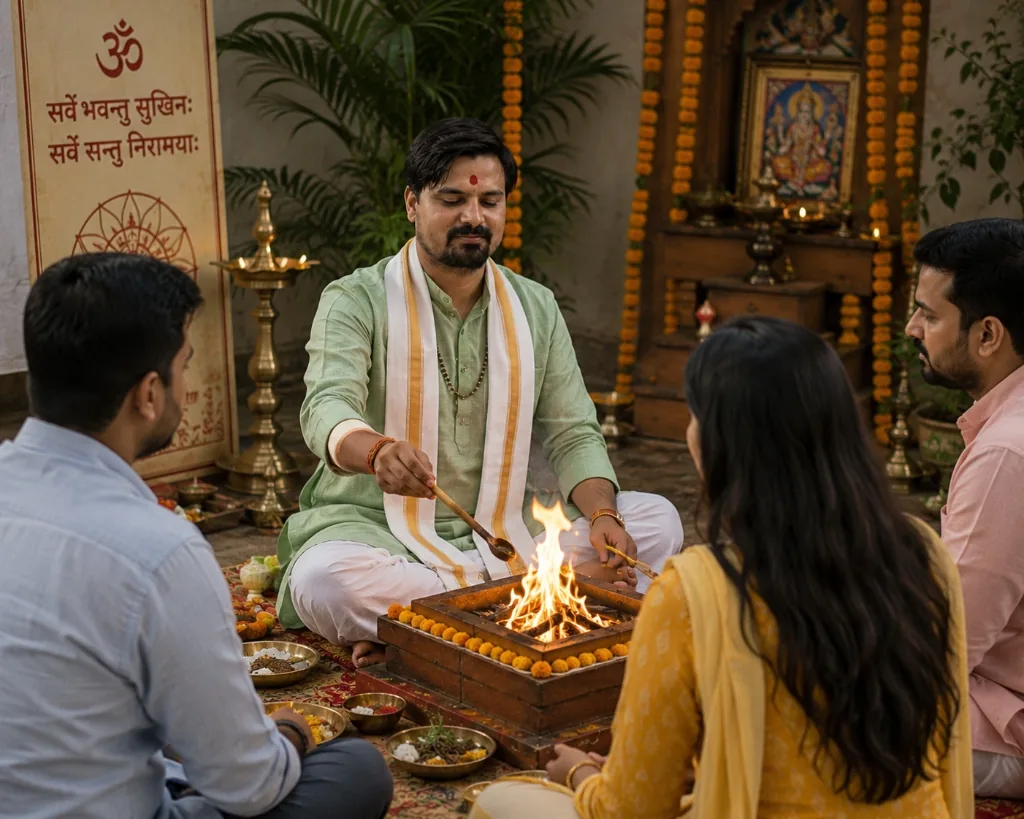
Maa Baglamukhi Havan, also known as Pitambara Havan or Bagla Havan, is one of the most powerful and revered Vedic fire rituals in the Shakta tradition of Hinduism. This sacred Yajna is performed to invoke the divine energy of Maa Baglamukhi — the eighth of the Dasha Mahavidyas — who is known as the goddess of paralysis, stunning, and complete control over adversaries.
Pandit Lakhan Sharma at Siddh Peeth Nalkheda, Madhya Pradesh, has mastered the authentic vidhi (procedure) of Baglamukhi Havan and has performed this powerful ritual for thousands of devotees seeking victory in legal battles, court cases, protection from enemies, business success, and removal of negative energies. This comprehensive guide covers everything you need to know about this sacred ritual.
Who is Maa Baglamukhi?
Maa Baglamukhi is the deity who controls speech, thought, and movement of all living beings. Her name comes from "Bagla" (which derives from "Valga" meaning bridle or control) and "Mukhi" meaning face. She is depicted in yellow robes, seated on a yellow lotus in a yellow ocean, holding a club in her right hand to strike enemies, and pulling the tongue of a demon with her left hand — symbolizing the power to paralyze and silence negative forces.
Her primary Siddh Peeth (sacred seat of power) is at Nalkheda, Madhya Pradesh, which is one of the three most powerful Baglamukhi temples in India. Worship at this location amplifies the effects of Havan and puja manifold compared to other locations.
Benefits of Performing Baglamukhi Havan
- Victory in court cases and legal disputes — Maa paralyzes the arguments of opponents and grants swift judgment in your favor
- Protection from enemies and evil-minded people — enemies lose their power to harm you
- Removal of black magic and negative energies (Buri Nazar, Kala Jadoo)
- Career and business success — removes obstacles and opens doors of opportunity
- Silencing of gossipers, competitors, and rivals
- Political success and victory in elections
- Recovery from unexplained illnesses caused by negative energies
- Protection of family members from harm and accidents
- Mental peace and freedom from anxiety caused by external threats
Baglamukhi Havan Vidhi — Step-by-Step Procedure
The Baglamukhi Havan follows a precise and sacred procedure. Under the expert guidance of Pandit Lakhan Sharma, the ritual is conducted with proper Sankalp, Shodashopachara Puja, Havan, and concluding with Aarti and Prasad distribution.
Step 1: Sankalp (Sacred Vow)
The ritual begins with the Sankalp — a formal sacred vow taken by the devotee (or on their behalf by the priest) stating the purpose of the Havan, the devotee's name, gotra (lineage), and the specific blessing sought from Maa Baglamukhi. This personalizes the ritual energy towards the devotee's specific need.
Step 2: Ganesh Puja & Kalash Sthapana
Lord Ganesha is worshipped first to remove obstacles in the ritual. Then a sacred Kalash (copper pot filled with holy water, mango leaves, and coconut) is established, representing the divine presence of Maa Baglamukhi during the ritual.
Step 3: Navgraha Puja
All nine planetary deities are propitiated to ensure cosmic support for the Havan. This step prevents planetary interference and aligns cosmic energies with the devotee's intentions.
Step 4: Maa Baglamukhi Shodashopachara Puja
The sixteen-step worship of Maa Baglamukhi with yellow flowers, turmeric, yellow sweets, chana dal (yellow lentils), yellow cloth, and yellow fruits. All offerings are in yellow (Pitambara) as yellow is the sacred color of Maa Baglamukhi.
Step 5: Havan (Sacred Fire Ritual)
The Havan begins with the lighting of the sacred fire (Agni) and inviting Agni Dev as the medium to carry offerings to Maa Baglamukhi. The priest recites the Baglamukhi Moola Mantra with each Ahuti (offering into fire).
Step 6: Purnahuti & Aarti
The final grand offering (Purnahuti) with coconut, ghee, and fruits marks the completion of the Havan. Followed by the powerful Baglamukhi Aarti and distribution of blessed Prasad.
Sacred Baglamukhi Havan Samagri (Ritual Materials)
The following sacred materials are used in an authentic Baglamukhi Havan:
- Yellow flowers (Marigold, Yellow Rose, Yellow Jasmine)
- Chana Dal (Yellow Split Lentils) — primary offering
- Turmeric powder and raw turmeric (Haldi)
- Pure Cow Ghee (Desi Ghee)
- Yellow sweets (Besan Ladoo, Yellow Barfi)
- Yellow cloth (Pitambara Vastra)
- Sesame seeds (Til)
- Camphor (Kapoor) and incense sticks
- Sacred wood — Aam (Mango), Peepal, or Havan Samagri mix
- Honey, curd, and raw milk (Panchamrit)
- Yellow fruits (Banana, Mango, Yellow Apples)
- Copper Kalash and Havan Kund (fire altar)
The Sacred Baglamukhi Mantra
The primary mantra used during Baglamukhi Havan is:
"ॐ ह्लीं बगलामुखि सर्वदुष्टानां वाचं मुखं पदं स्तम्भय जिह्वां कीलय बुद्धिं विनाशय ह्लीं ॐ स्वाहा"
"Om Hleem Baglamukhi Sarvadushtanam Vacham Mukham Padam Stambhay Jihvam Kilaya Buddhim Vinashay Hleem Om Swaha"
This powerful mantra, recited with each Ahuti, invokes Maa Baglamukhi to paralyze the speech, movement, and intelligence of all evil forces working against the devotee.
How Many Ahutis are Required?
The number of Ahutis (fire offerings) determines the intensity and duration of the Havan:
- 1,000 Ahutis — Basic Havan for general blessings and protection
- 10,000 Ahutis — For serious legal cases, business disputes, or persistent enemy problems
- 1,00,000 Ahutis (Lakh Ahuti) — Full Anushthan-level Havan for severe or long-standing issues
- 11,00,000 Ahutis — Maha Anushthan for extraordinary situations requiring complete divine intervention
🔥 Book Your Baglamukhi Havan Today
Pandit Lakhan Sharma performs authentic Baglamukhi Havan at Siddh Peeth Nalkheda with complete Sankalp Vidhi. Online Havan also available with live video streaming and home Prasad delivery across India.
Baglamukhi Havan vs Baglamukhi Anushthan — What's the Difference?
Many devotees confuse Havan with Anushthan. Here's the key difference:
- Baglamukhi Havan — A one-time fire ritual ranging from 3 hours to 2 days depending on the number of Ahutis. Focused and intense.
- Baglamukhi Anushthan — An extended ritual practice typically spanning 9 to 41 days, involving daily mantra japa (chanting), daily Havan, and specific austerities. More comprehensive and longer-lasting in effect.
Pandit Lakhan Sharma recommends Havan for immediate relief from urgent problems, while Anushthan is recommended for deep-rooted or long-standing issues.
Frequently Asked Questions
Can Baglamukhi Havan be performed for someone who is not present physically?
Yes. Pandit Lakhan Sharma performs Havan with proper Sankalp taken in the devotee's name and gotra. The ritual energy is directed to the devotee regardless of their physical location. Live video streaming ensures you witness the ritual.
How long does a Baglamukhi Havan take?
A basic Havan (1,000 Ahutis) takes approximately 3-4 hours. A Lakh Ahuti Havan may take 1-2 full days and is typically performed by multiple priests simultaneously.
What results can I expect from Baglamukhi Havan?
Most devotees report feeling a sense of relief, mental clarity, and reduced anxiety within days of the Havan. Tangible results in legal cases or enemy-related issues typically manifest within 40 days to 3 months.
Is there any specific day for Baglamukhi Havan?
Tuesday (Mangalwar) and Sunday are considered most auspicious for Baglamukhi Havan. The 8th lunar day (Ashtami) and full moon (Purnima) are also powerful times. Pandit Ji selects the most favorable muhurta for each devotee.